
How to Mix Round and Rectangle Tables at Your Wedding

Mixing round and rectangle tables can create a beautiful, layered reception layout but if it’s not approached thoughtfully, it can also feel visually disconnected.
The key isn’t choosing one or the other. It’s creating cohesion between both.
Here’s how to do it well.
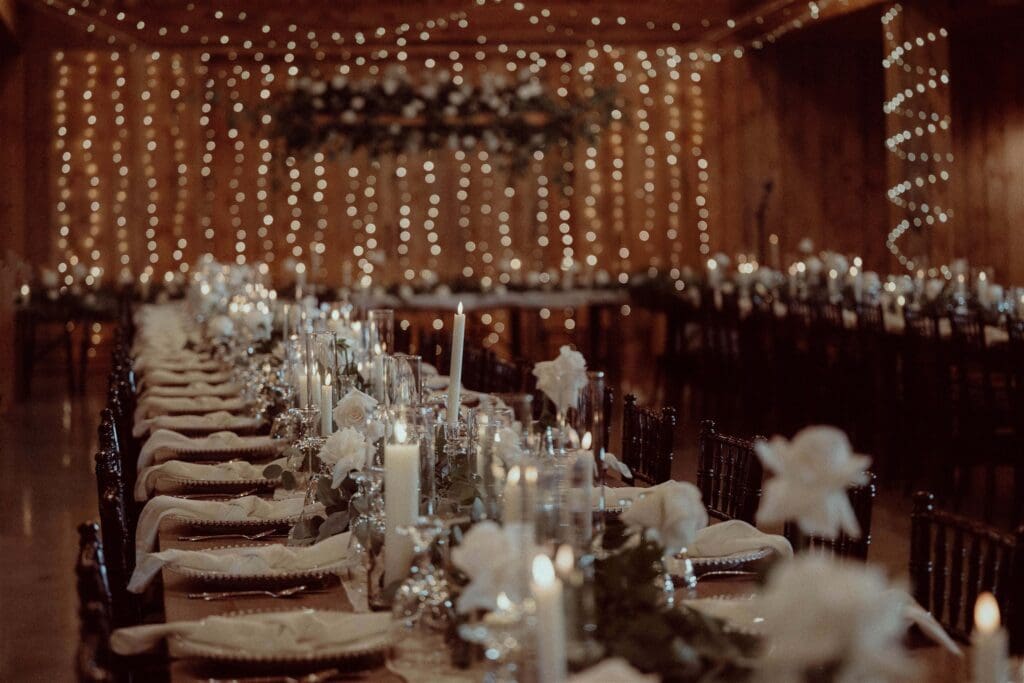
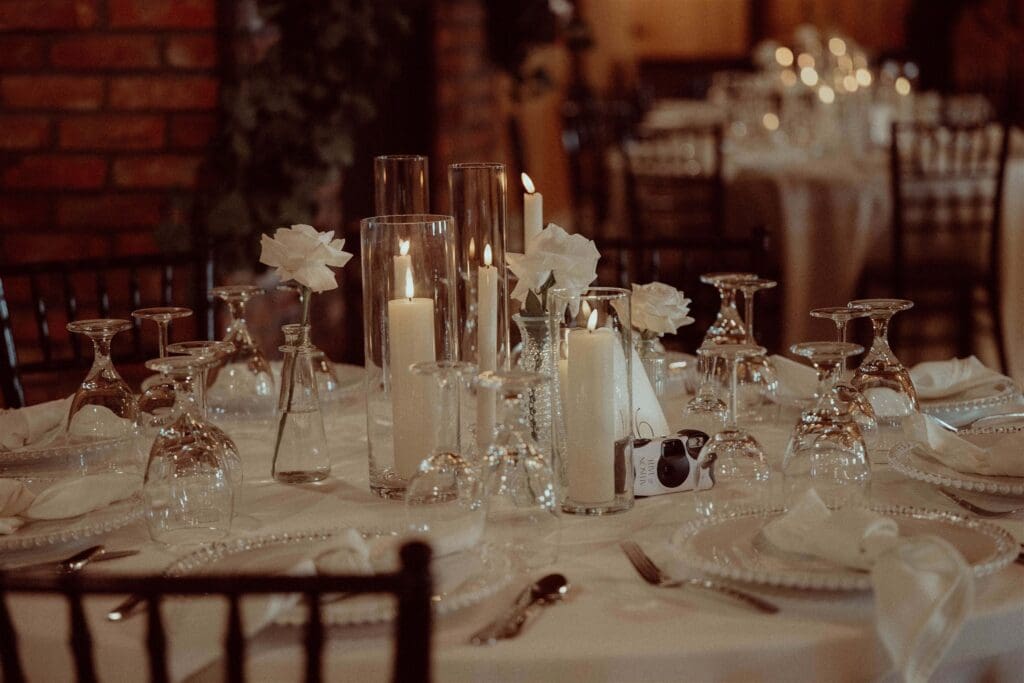
1. Anchor the Room With Intention
Rectangle harvest tables naturally draw the eye and feel structured. Round tables soften a space and encourage conversation.
Instead of scattering them randomly, anchor your layout.
For example:
- Rectangles for the head table and family tables
- Rounds filling the remainder of the room
- Or alternating in a symmetrical pattern
When there’s intention behind placement, it feels designed – not accidental.
2. Keep Your Linens Consistent
If you’re mixing table shapes, avoid introducing too many additional variables.
Using the same linen color across both round and rectangle tables helps unify the room instantly.
If you want variation, consider subtle texture differences rather than dramatic color shifts.
Consistency is what makes a mixed layout feel elevated.
3. Repeat Key Design Elements
Cohesion happens through repetition.
If your rectangle tables have:
- Bud vases
- Candlesticks
- Low floral arrangements
Make sure those elements are echoed on your round tables in a similar scale and tone.
They don’t need to be identical but they should feel related.
4. Consider Guest Count & Flow
Rectangle tables take up space differently than rounds.
Before committing, think through:
- Aisle spacing
- Dance floor proximity
- Vendor access
- Guest movement
A layout that looks beautiful on paper still needs to function well in real life.
When It’s Done Well…
Mixing table shapes creates depth and visual interest. It adds dimension to your reception space and often makes the design feel more curated.
When done without a clear plan, though, it can unintentionally divide the room.
Thoughtful layout decisions make all the difference.
If you’re unsure which configuration works best for your venue and guest count, styling guidance can bring clarity and ensure the final result feels cohesive from every angle.

